
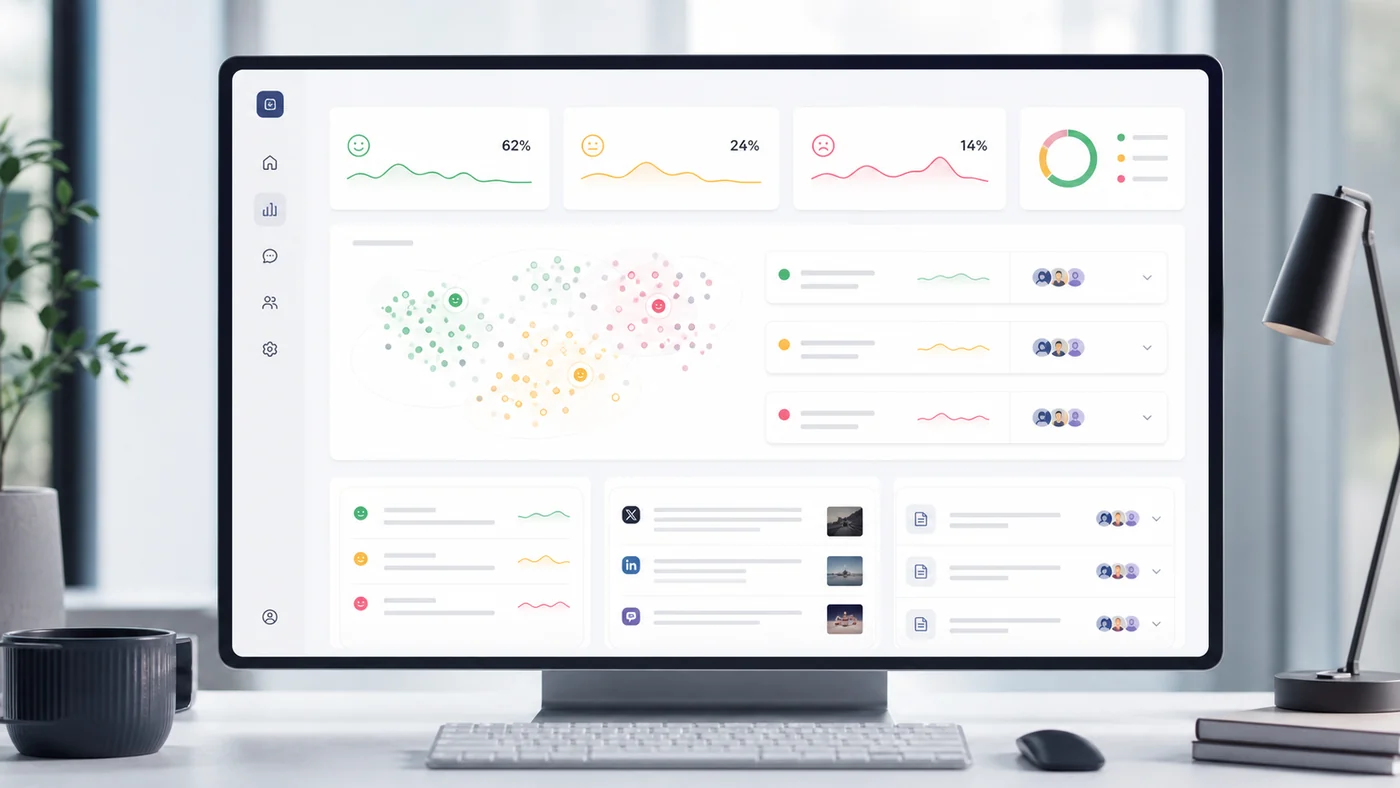
A negative percentage is not a decision
A dashboard that says “23% negative” is only a starting point. The business meaning depends on what people are negative about, where the discussion happens, and whether the signal is growing.
The same negative share can mean delivery complaints, pricing comparison, fandom conflict, customer service issues, or a single high-reach post being redistributed.
Good sentiment analysis answers: why did the emotion appear, where did it appear, is it spreading, and who should act on it?
Sentiment must be tied to topics
| Sentiment + topic | Possible meaning | Owner |
|---|---|---|
| Negative + quality | Trust or repurchase risk | Product, support, PR |
| Negative + delivery | Fulfillment issue | Operations, support |
| Negative + pricing | Competitor comparison or promotion gap | Marketing, sales |
| Neutral + questions | Unclear messaging | Content, support |
| Positive + detailed experience | Proof for content | Marketing |
If the system only says “negative is up,” someone still has to read the mentions. If it says “negative is up on Xiaohongshu around packaging damage,” the team knows where to investigate.
Four common failure modes
Sarcasm, mixed sentiment, fandom context, and platform context can all break simple scoring. A review can praise the product but criticize support. A Weibo controversy can spread differently from a Xiaohongshu complaint. A public-figure discussion may require a very different reading than a consumer product review.
Important samples should always be traceable to the original public source.
How Searchore should use sentiment
Searchore should connect sentiment with topics, platforms, competitors, keywords, engagement, and public evidence links. Executive reporting should not say only “negative is 23%.” It should explain the reason, the source, representative mentions, and recommended ownership.
That is the difference between a chart and a decision.
Want to see this with your own brand data?
Book a Searchore demo and we will walk through platform coverage, refresh cadence, reports, and keyword setup for your brand and competitors.
Searchore supports monitoring legally accessible public content. Coverage may vary depending on platform rules, public availability, authorization methods, and lawful data sources. Platform names are used only to describe public sources that may be monitored and do not imply official partnership, authorization, or endorsement unless explicitly stated.